

Losing fat requires more than just moving more—it calls for exercises that specifically target fat burning while preserving muscle. The most effective way to burn fat is through a mix of cardio and strength training exercises that boost metabolism and help reduce body fat over time. This balanced approach helps the body burn calories efficiently and build muscle, which supports long-term fat loss.

He or she focuses on exercises like squats, push-ups, and rows, which work multiple muscle groups at once and increase calorie burn. Combining these with consistent aerobic activities, like running or cycling, creates a workout routine that targets stubborn fat without wasting time on less effective exercises.
A clear, planned routine also includes tracking progress and avoiding common mistakes, such as focusing only on weight loss instead of fat loss or neglecting recovery. This makes the journey sustainable and results easier to maintain.
Key Takeaways
- Fat loss works best with a combination of cardio and strength exercises.
- Compound movements help burn more calories by engaging several muscles.
- Tracking progress and avoiding common workout errors supports lasting results.
Understanding Fat Loss

Fat loss happens when the body uses stored fat for energy instead of just food fuel. This process depends on managing energy intake, exercise, and understanding common mistakes that block progress.
How Fat Loss Works
Fat loss begins when the body burns more energy than it takes in. This causes the body to use stored fat for fuel. Fat is broken down into smaller parts and used as energy during activities like walking or exercising.
Exercise helps increase the number of calories burned, but it mainly targets fat when done regularly and at the right intensity. Steady aerobic activities like jogging or cycling are good fat burners. Weight training also helps by building muscle, which raises resting metabolism. Muscle burns more calories even at rest.
Role of Calorie Deficit
A calorie deficit occurs when a person consumes fewer calories than they burn. This is the most important factor in fat loss. Without a calorie deficit, the body stores extra calories as fat.
To create a calorie deficit, one can eat less, exercise more, or combine both. However, cutting calories too low can slow metabolism and increase hunger hormones, making fat loss harder. A moderate deficit with consistent activity is the safest and most effective approach.
Myths About Fat Loss
One myth is the idea of the “fat burning zone,” where only specific heart rates burn fat. While some fat is burned at lower intensities, total calories burned throughout exercise matters more for fat loss.
Another myth says people must avoid all fats in their diet. Healthy fats are important for overall health and can be included without stopping fat loss.
Lastly, some believe spot reduction works, but it’s impossible to lose fat from just one area by targeting it with exercise. Fat loss happens across the whole body.
Cardiovascular Workouts for Fat Loss
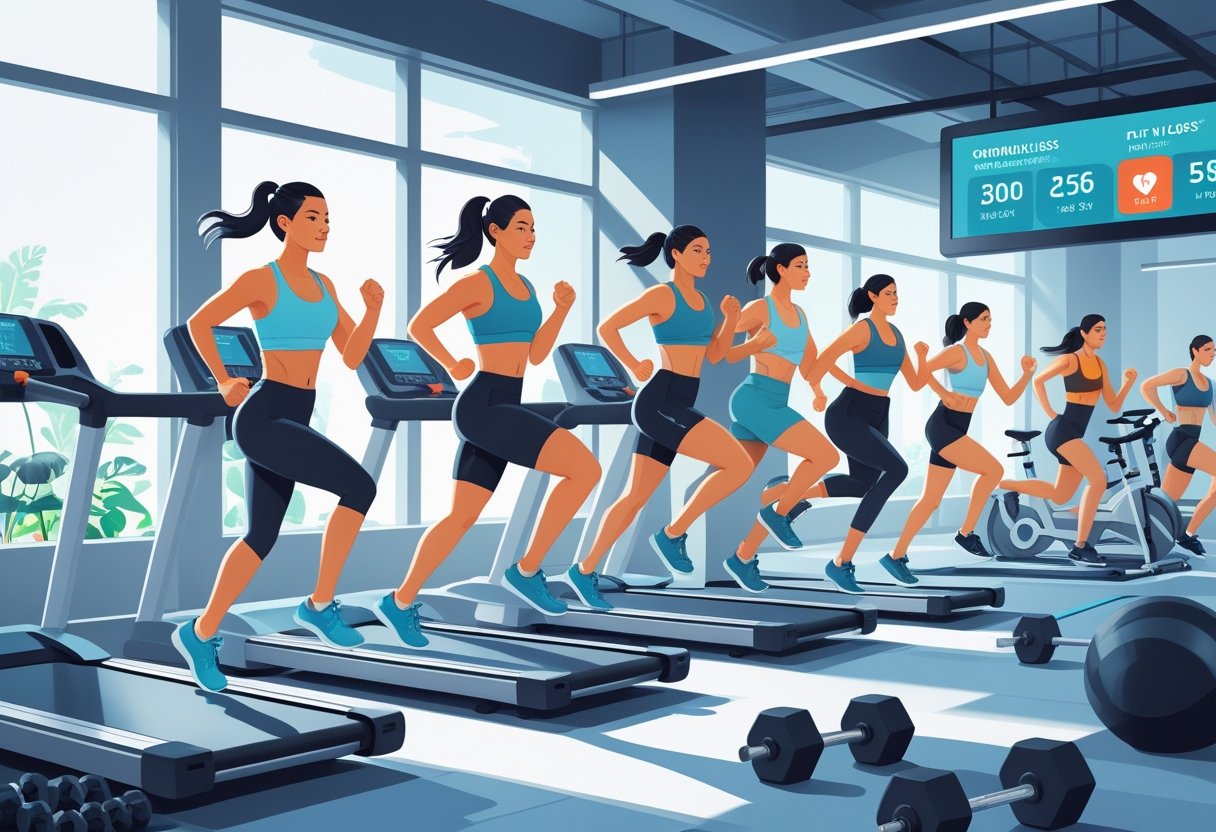
Cardio workouts help burn calories and improve heart health. Different types of cardio target fat loss in unique ways, either by boosting metabolism quickly or promoting steady calorie burn over time. Choosing the right style depends on fitness level and goals.
HIIT Sessions
High-Intensity Interval Training (HIIT) involves short bursts of intense exercise followed by brief rest periods. This style raises the heart rate quickly and burns a lot of calories in a short time.
HIIT can include exercises like sprinting, jumping, or cycling at maximum effort for 20-40 seconds. Then, it’s followed by 10-30 seconds of rest or low-intensity movement. Repeating this cycle 8-12 times creates a session lasting about 15-30 minutes.
HIIT not only burns fat during exercise but also increases calorie burn afterward because of its effect on metabolism. This method works well for those with limited time who want strong fat loss results.
Steady-State Cardio
Steady-state cardio means moving at a consistent pace for a longer period, usually 30 minutes or more. Examples include jogging, cycling, swimming, or brisk walking.
This type of cardio keeps the heart rate at a moderate level, which uses fat as a main fuel source. It’s easier to maintain and can be less taxing on the body than high-intensity workouts.
Steady-state cardio is effective for burning calories steadily and improving endurance. It suits people who enjoy longer, less intense exercise and want to build a base level of fitness.
Interval Training
Interval training mixes bursts of higher effort with times of low or moderate effort. It is less intense than HIIT but more varied than steady-state cardio.
Intervals could be jogging for 3 minutes, then walking for 1 minute, repeated several times. This helps prevent boredom and trains the body to handle different intensities, which can improve stamina and calorie burn.
Interval training allows customization based on fitness level and goals. It balances fat burning with buildup of aerobic and anaerobic capacity, making it a versatile choice for fat loss.
Strength Training for Fat Reduction
Strength training plays a key role in burning fat by increasing muscle mass and boosting metabolism. It helps the body burn more calories even at rest. Effective strength workouts combine different types of exercises that challenge multiple muscle groups and keep intensity high.
Compound Movements
Compound movements involve several joints and muscle groups at once. Examples include squats, deadlifts, push-ups, and pull-ups. These exercises require more energy, which leads to higher calorie burn during and after the workout.
They build strength quickly and improve muscle tone across the body. Because they work big muscle groups, compound movements also enhance metabolism, helping to burn fat over time. Doing these exercises with proper form is important to reduce injury risk and get the best results.
Circuit Training
Circuit training mixes strength and cardio exercises performed back-to-back with little rest. This keeps the heart rate high, increasing calorie burn during the session. It also improves endurance and muscle strength simultaneously.
A typical circuit may include weightlifting moves, bodyweight exercises, and short bursts of cardio like jumping jacks. This style saves time and increases the afterburn effect, where the body continues to burn calories post-workout. Circuit training is adaptable for different fitness levels and goals.
Bodyweight Exercises
Bodyweight exercises use the person’s own weight as resistance. Push-ups, planks, and lunges are common examples. These moves are accessible because they need no equipment and can be done anywhere.
They help build lean muscle and improve muscle endurance. When done with good intensity and volume, bodyweight exercises boost metabolism and support fat loss. Progression is possible by increasing reps, sets, or reducing rest between exercises to keep challenging the body.
Structuring My Weekly Exercise Routine
A well-organized plan helps balance workouts, rest, and progress tracking. This keeps the routine effective and prevents burnout. It also ensures steady improvements and adapts to changing fitness levels.
Sample Weekly Plan
The weekly plan often includes 3 to 5 workout days. It mixes strength training and cardio for fat loss and muscle tone. For example:
| Day | Workout Type | Focus |
|---|---|---|
| Monday | Strength Training | Full body, compound moves |
| Tuesday | Cardio | HIIT or steady-state |
| Wednesday | Rest or Light Activity | Walking or stretching |
| Thursday | Strength Training | Upper body focus |
| Friday | Cardio | Interval training |
| Saturday | Strength Training | Lower body focus |
| Sunday | Rest | Recovery |
Rest days are important to avoid injury and help muscles recover. Daily warm-ups prepare the body and improve workout quality.
Progressive Overload
Increasing workout difficulty over time is key for fat loss and muscle building. This can mean adding weight, doing more reps, or decreasing rest time.
He or she should track how much weight is lifted or how many reps are done each session. Gradual changes ensure steady progress without risking injury.
Using a workout journal or app to log sets, reps, and weights helps plan future workouts and measure improvements accurately. Progressive overload prevents plateaus and keeps fitness advancing.
Tracking Progress
Tracking progress is important to stay motivated and adjust routines. He or she can use simple methods like:
- Weekly weigh-ins
- Taking measurements of waist, hips, and other areas
- Recording how clothes fit
- Noting energy levels and workout ease
Progress photos can visually show changes over time.
Tracking workouts, weights, and reps also helps spot patterns. This makes it easier to tweak the plan and reach fat loss goals efficiently. Regular tracking allows adaptions based on real results, avoiding guesswork.
Common Mistakes to Avoid in Fat Loss Workouts
Fat loss workouts need a balance between effort and rest. Failing to find this balance can slow progress or cause injury. Proper planning and recovery are just as important as the exercises themselves.
Overtraining
Overtraining happens when someone exercises too much without enough rest. This can lead to tired muscles, lower energy, and even weight gain because the body holds on to fat. When overtraining, the body produces more stress hormones, which can block fat loss.
Signs of overtraining include constant soreness, trouble sleeping, and feeling weak during workouts. To avoid overtraining, it’s important to schedule rest days and listen to the body’s signals. Mixing workout types, such as combining weight training with cardio, helps prevent pushing the body too hard in one area.
Neglecting Recovery
Recovery is when the body repairs muscles and restores energy. Skipping recovery reduces workout benefits and increases injury risk. Proper recovery includes sleep, hydration, nutrition, and light activity.
Key recovery practices:
- Sleep 7-9 hours each night
- Drink enough water throughout the day
- Eat balanced meals with protein
- Use gentle stretching or walking on rest days
Neglecting recovery can cause plateaus in fat loss. Recovery is not weakness; it’s a necessary step that makes workouts more effective.
Frequently Asked Questions
Fat loss workouts should combine cardio and strength training for best results. Consistency and full-body movement are important. Targeting specific areas alone does not reduce fat in those spots.
What are effective fat-burning workouts for women to do at home?
High-intensity interval training (HIIT) is highly effective for fat loss at home. It includes short bursts of intense exercise with rest periods, boosting metabolism.
Bodyweight exercises like squats, lunges, and push-ups build muscle and burn calories. Combining these with cardio, such as jumping rope or brisk walking, enhances fat loss.
Which exercises yield the quickest results in terms of fat loss?
Running and jumping rope burn many calories quickly. HIIT workouts also lead to fast fat loss due to increased calorie burn during and after exercise.
Consistency matters more than the specific exercise. Doing workouts 3-5 times a week provides better results than occasional intense sessions.
What are the best workouts specifically for women aiming to lose fat?
Women benefit from combining cardio with strength training to preserve muscle while losing fat. Cardio options include brisk walking, cycling, or swimming.
Strength training with weights or resistance bands helps maintain metabolism and tone the body. A balanced plan with both types of exercise delivers steady fat loss.

